


Internal Load
A 5 minute effort at 350 watts might be a comfortable Zone 2 cruise for one athlete and an all-out Zone 5 battle for another.
The external load is the same, difference lies in Internal Load — how much any given effort truly costs the body at that exact moment.
What is internal load?
It is your body's metabolic response to physical and psychological stress. It's extremely individual and continuously changing during exercise.
It shows how much maintaining any effort truly costs your body. The goal of training is to reduce that cost by improving your abilities.
Internal load measurement
mnsX continuously measures the changes in internal load, the internal overload and internal recovery.
It can detect within seconds, precisely, when the external load — bike power or running power — has crossed the internal overload threshold: your momentary Critical Power.
Above that threshold, fatigue accumulates rapidly and the effort becomes unsustainable. Below the threshold, recovery begins.

Manage internal load
Internal Load can only be managed by adjusting External Load, such as power or pace.
momentary Critical Power is the connection between them.
momentary Critical Power
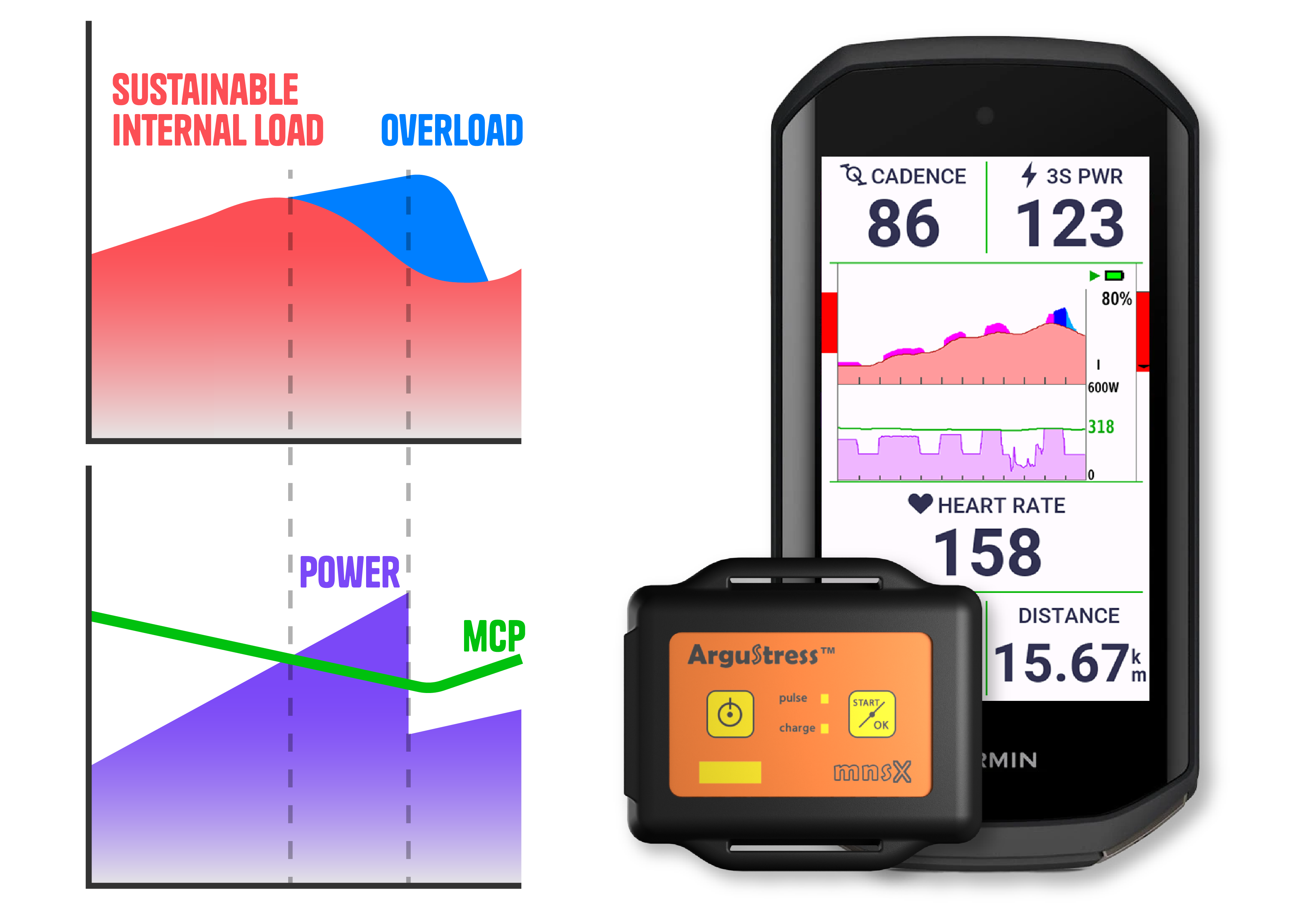
mCP is a new, key parameter which shows the momentary threshold between sustainable and unsustainable internal load.
mCP's value
mCP is a continuously changing, momentary External Load value (bike power, run power). It primarly depends on fatigue.
Overload
Above mCP, the workload becomes unsustainable, internal overload occurs and fatigue accumulates rapidly.
Recovery
After an overload, complete recovery of the aerobic system is crucial — without it, endurance capacity can permanently decline. Below mCP, internal recovery begins.
New technology
mnsX is the first metabolic neuromuscular skin refleX monitor.
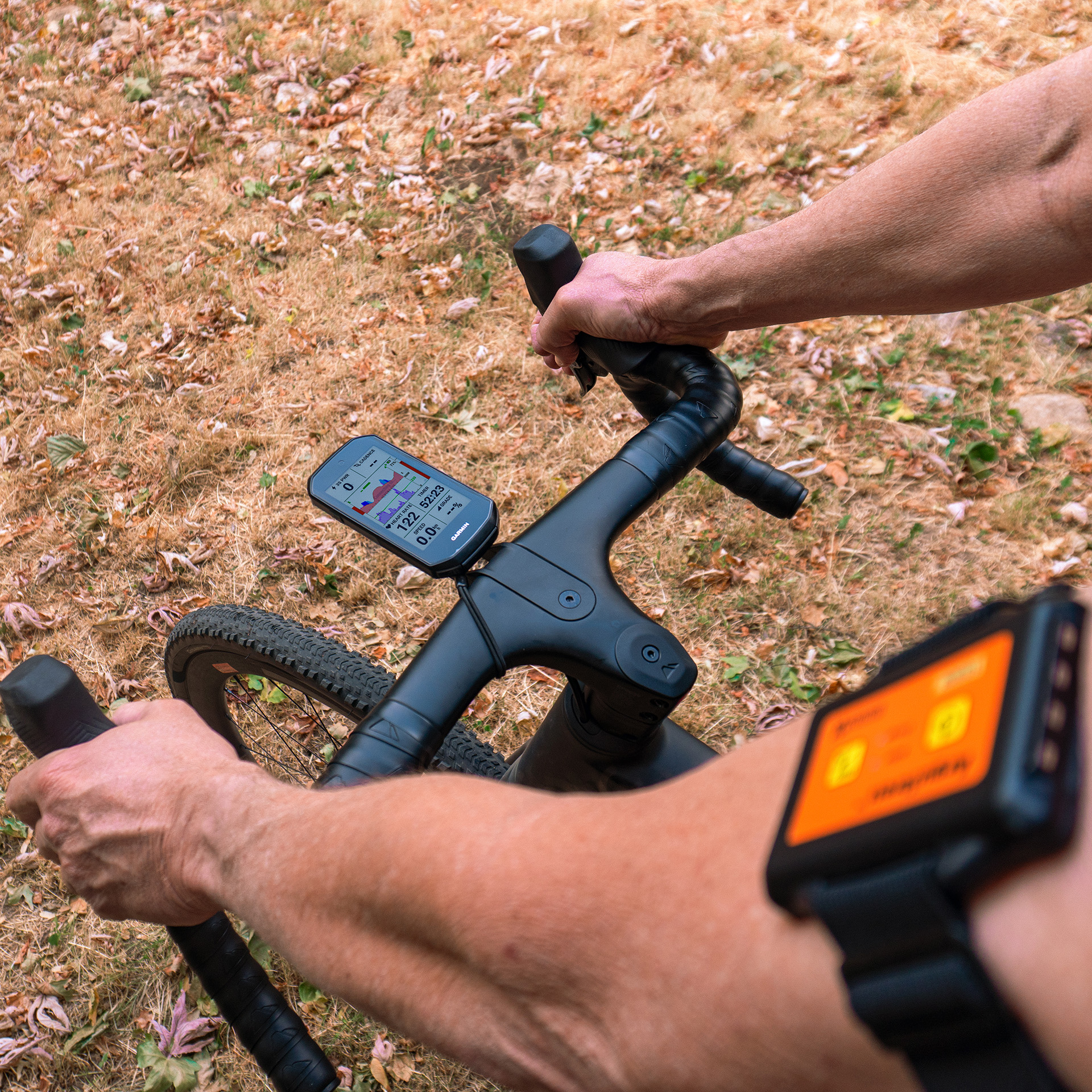
It continuously measures the changes in internal load, the overload and recovery, momentary Critical Power and other essential key parameters during training or racing.
It displays the measured data on your watch or bike computer and notifies you of overload via sound alert or vibration (on watch).
Essential data in real-time
Overload
When intensity exceeds the mCP, your aerobic system is overloaded and fatigue accumulates rapidly. The display shows when you approach the threshold, and exactly when you've crossed it.
(Pink: approaching critical threshold — Blue: aerobic system overloaded)
Recovery
When intensity drops below mCP, recovery begins. The display shows the entire process: when recovery starts, how it progresses, and when it's complete. Knowing this, the optimal duration and intensity of every recovery phase becomes easy to define.
(Recovery: green graph above internal load graph. 1 unit: recovery begins/ends — 2 unit: recovery in progress — 3 unit: recovery complete)
Fatigue & Performance Reserve
The declining mCP reveals fatigue accumulation in real time. When mCP drops below your 20-minute CP value, you've likely reached the limit of your high-intensity capacity — time to recover.
The gap between your current intensity and mCP is your Performance Reserve — a live read of how much you have left. Use it to pace your repetitions, or to make smarter decisions mid-race.